Santa Muerte: Sanctuary Amongst Shadows
Art is meant to provoke. It is meant to make you feel something. Art is not meant to be cautious to protect fragile beliefs. It exists to reveal truths that are often ignored. Religion has inspired kindness and community for centuries. But its history is also marked by harm. Abuse covered by silence. Conversion therapy disguised as compassion. Condemnation of queer and trans people while excusing sins that align with tradition. And even now, violence is justified in the name of God. Laws are written to control our bodies. Religious nationalism decides who is welcomed with open arms and who is met with guns and cages. Families are deported and torn apart while leaders insist it is the will of a higher power. Occupation of land continues behind the shield of righteousness. Holy words are twisted into weapons. Faith is not the problem, but the human desire for power often hides behind scripture.
I was fortunate that my religious upbringing did not harm me at home. My mother gave me the freedom to make choices. We attended Catholic church on Sundays and holidays until I reached an age where I no longer wanted to go. She believed that you do not need a pew or a priest to speak to God. Prayer is between you and spirit. You do not have to earn love.
I have also known people of faith whose spirituality is expressed through compassion rather than control. People who serve their communities because caring for others is part of their purpose. People who offer support without demanding that anyone believe what they believe. They do not preach. They do not punish. They simply show up. I respect that kind of faith. It reminds me that religion at its best mirrors love itself. I only wish that experience was universal.
The harm came from the world around me. From the microaggressions at gatherings that were supposed to feel safe. From an ex’s mother calling me the devil. I have watched queer friends lose their homes because their families believed religion required them to choose doctrine over their own children. I have seen women taught that obedience is holy while men are excused for their harm. Much of it is casual, spoken in passing. Comments overheard in public spaces. Conversations that reduce entire identities to sin, fear, or political debate. Because I pass as male, many people do not know I am trans. I have overheard customers at work praise politicians who fight to strip my community of rights. These moments are not always directed at me, but they accumulate. And it is a different kind of grief to witness how far that harm can go when belief is valued more than love.
Being spiritual is not exclusive to any religion. I believe in something greater than myself and honor it privately. I do not claim to know the full truth. None of us will until we are gone from this world. I am not here to convert you. My faith is lived through how I treat people. I do not need doctrine to be a good person.
This piece was originally proposed as an installation for a church-adjacent space. It was not selected, and I understand that committees have difficult decisions to make. Still, the rejection brought up familiar feelings of exclusion. Instead of letting that stop the work, I used it as fuel. Creating this piece became a way to process those feelings and to share my perspective anyway. If anything, it reaffirmed why this conversation matters.
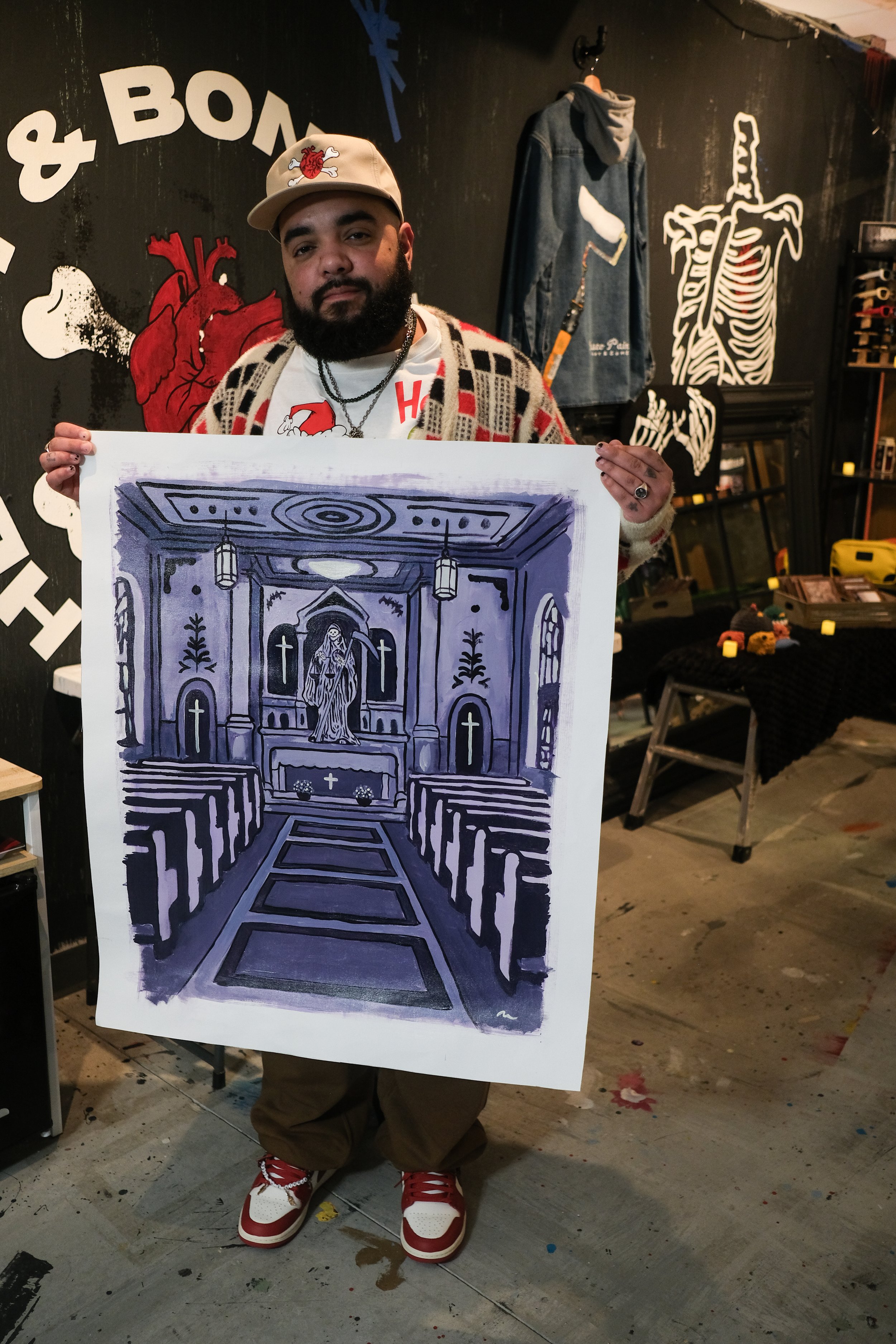
This work is inspired by Santa Muerte, a figure loved by those who have been cast aside. People experiencing poverty. Sex workers. Gang members. Communities living in the margins. LGBTQIA+ people. She is sought by those who are often denied compassion, protection, or dignity elsewhere. Santa Muerte offers healing, protection, love, and prosperity to those left outside the church doors. She welcomes everyone exactly as they are.
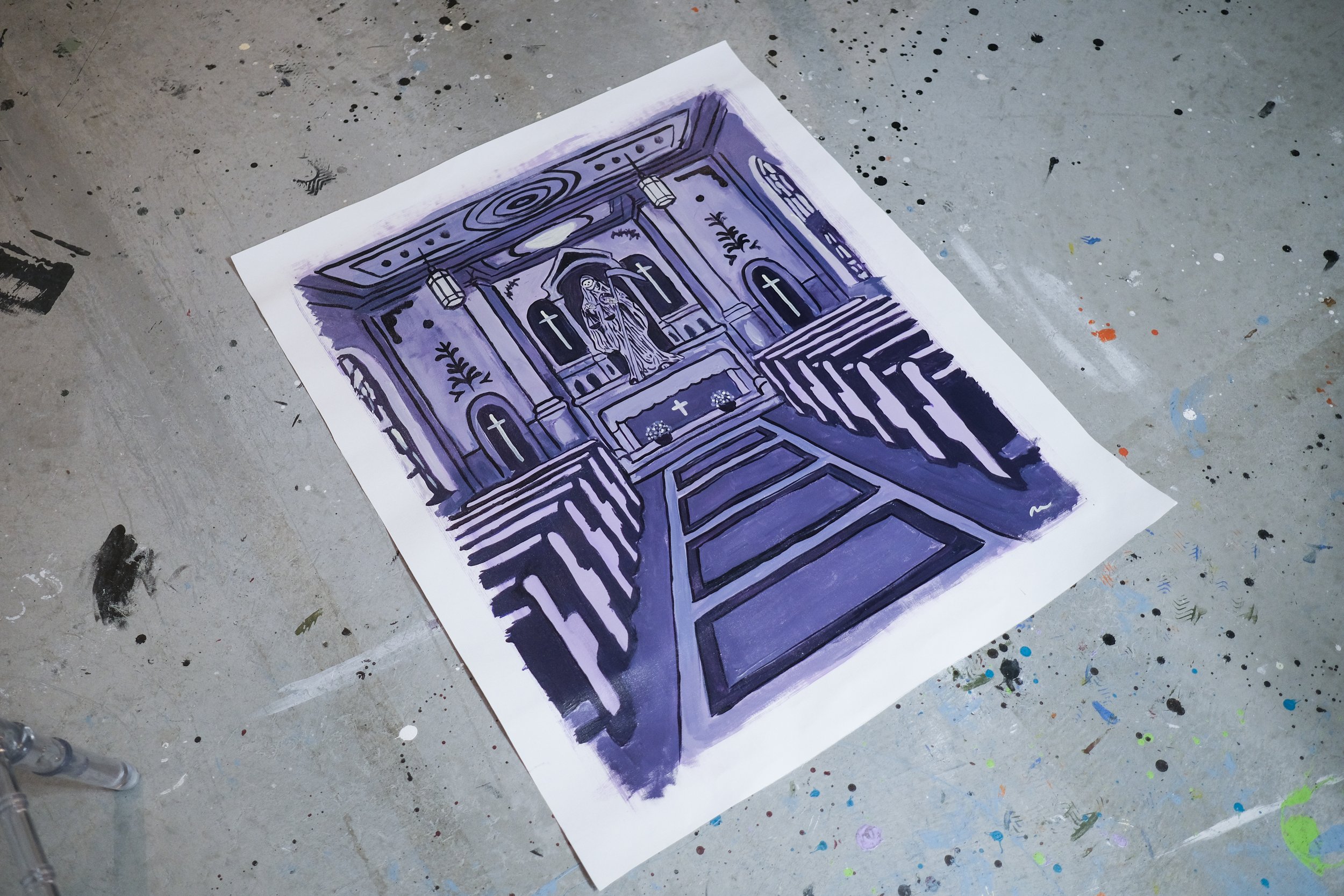
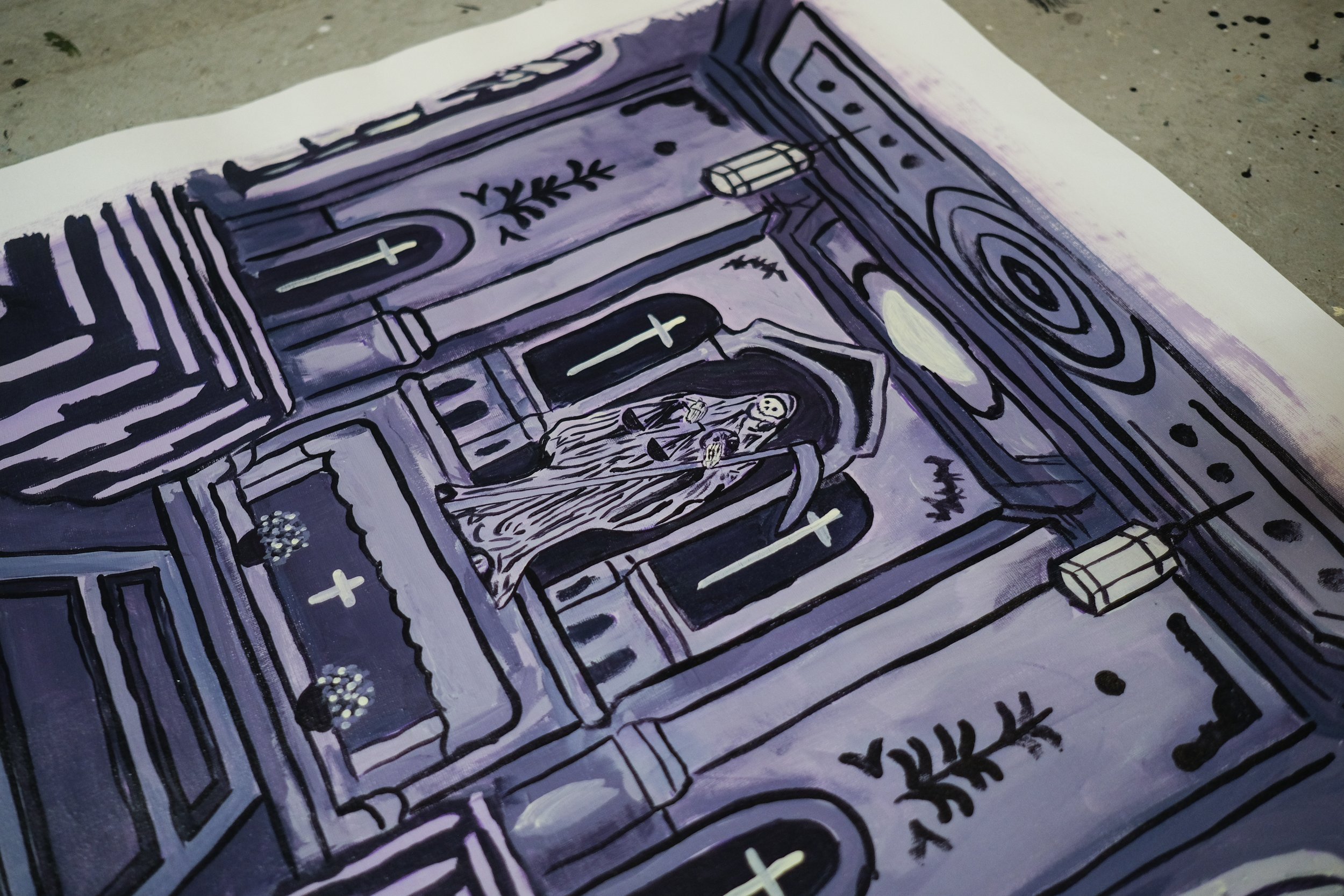
People turn to Santa Muerte because she feels present when other spiritual spaces feel closed off. She is approached in moments of vulnerability, when justice feels distant and survival feels uncertain. Her imagery reflects that relationship. The scales she carries speak to fairness and equality, the hope that everyone will be weighed the same in the end. The globe represents death’s reach across all people. The scythe connects her to death itself, a reminder of life’s impermanence and her role as a guide between worlds. In other depictions, she may also hold an hourglass to represent time and mortality, or a lamp or owl associated with guidance and awareness in darkness.
Santa Muerte has roots in Indigenous Mexican spirituality, shaped and transformed through centuries of colonization. The church attempted to replace older belief systems with Catholicism, labeling many Indigenous practices as sinful or dangerous to maintain control. Puerto Rico experienced the same forced transformation. Our ancestors honored earth and spirit long before statues and sermons were introduced. Many Indigenous practices were erased or labeled evil to secure control.
The painting itself is acrylic on canvas. I began with a mockup using a reference photo I took of a church in Atlantic City. I wanted the structure to feel familiar and grounded, while the symbolism challenged what that space represents. I used acrylic paint, paint markers, and invested in fine lining brushes to achieve clean, intentional lines. The process was slow and deliberate. Every mark felt like an act of care and resistance.
We are living in a time when trans people are used as scapegoats for cultural fear. Yet many of us are simply trying to align soul and body. That is a spiritual experience. A sacred one. We should not be condemned for choosing authenticity. Transition is not a sin. It is a return to ourselves.
I believe there is much to learn from Santa Muerte. Faith can embrace complexity. It can be a refuge for the forgotten. It can evolve beyond fear. It can love without conditions or checklists. There is room in spirituality for every single one of us.
Sanctuary should not require conformity.
Spirituality does not belong to institutions.
Belonging is our birthright.
We are divine simply by being here.
This piece is for the misunderstood.
The unseen.
The ones who continue seeking a place where their soul is not questioned but cherished.